Source Screw Cap Cryovial Tube for Lab Storage and Shipping
Compare 30 screw cap cryovial tube options from verified Chinese suppliers. Buyers can review specifications like capacity, material, and sterilization methods to find suitable laboratory storage solutions.
Key considerations
Products List





Comprehensive Sourcing Guide
Strategic Sourcing Guide for Screw Cap Cryovial Tubes
Understanding Technical Specifications and Material Composition
When sourcing screw cap cryovial tubes, the primary objective is to identify products that maintain sample integrity under extreme thermal conditions while ensuring mechanical reliability during repeated handling. The core component of these vessels is the tube body, which is predominantly manufactured from high-grade plastic or rubber composites. In the current market, polypropylene (PP) plastic is a frequent standard, offering a balance of chemical resistance and thermal stability. The material selection directly influences the product's ability to withstand the rigorous temperature ranges required for cryogenic storage, which can extend from -196°C to 121°C. Buyers must verify that the specific plastic formulation supports this wide thermal window without becoming brittle at low temperatures or deforming at high sterilization temperatures.
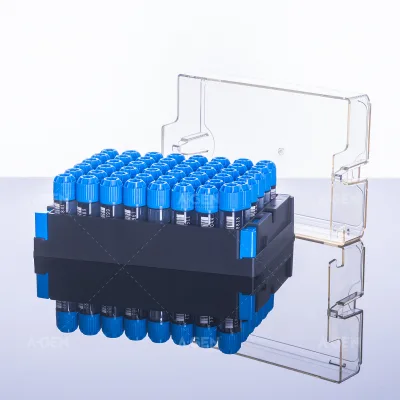
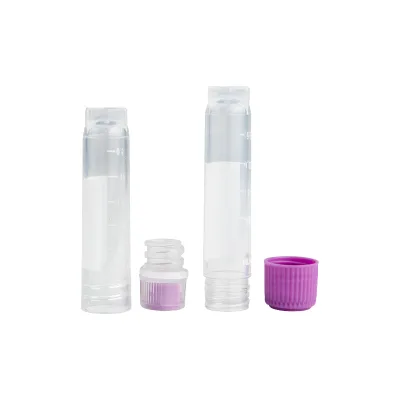
The closure mechanism is equally critical. The defining feature of a screw cap cryovial tube is the external screw cap, designed to create a hermetic seal. This cap often features a gasket, which can be supplied either with or without a gasket depending on the specific application requirements. The presence of a gasket is essential for preventing leakage and cross-contamination, particularly when storing volatile or sensitive biological samples. The cap color is another variable; standard offerings include blue, clear, or customized colors to facilitate sample differentiation. Furthermore, the graduation markings on the tube body, whether printed or moulded, provide essential volume reference points, typically ranging from 0.5ml to 5ml. The bottom shape is another technical specification to confirm; conical bottoms are preferred for efficient sample recovery, allowing for the collection of pellets or sediments after centrifugation.
Compliance, Certification, and Sterility Standards
Navigating the regulatory landscape is a non-negotiable aspect of sourcing laboratory-grade cryovials. Compliance ensures that the products meet international safety and quality benchmarks, which is vital for maintaining the validity of research data. The supply chain for these tubes frequently references ISO certification as a baseline for quality management systems. Additionally, CE certification is a common requirement, indicating conformity with health, safety, and environmental protection standards for products sold within the European Economic Area. Buyers should explicitly request documentation verifying these certifications for the specific batch or production line they intend to purchase, as certification status can vary between suppliers and product lines.
Sterility is a critical attribute that dictates the intended use case. Products are available in both sterile and non-sterile configurations. For applications involving cell culture, clinical diagnostics, or any procedure requiring aseptic conditions, sterile tubes are mandatory. The sterilization method is a key differentiator; some products undergo Ethylene Oxide (EtO) sterilization, while others may be supplied without this treatment. It is imperative to verify the sterilization status before procurement, as the presence or absence of EtO residues can impact sensitive biological samples. The packaging method also plays a role in maintaining sterility; options include individual bagging (e.g., 100 pieces per bag) or bulk carton packing (e.g., 20 bags per carton). For high-volume orders, bulk packaging in cartons containing thousands of units is common, but the integrity of the sterile barrier must be maintained throughout the supply chain.
Cost Drivers and Minimum Order Quantity Dynamics
The pricing structure for screw cap cryovial tubes is influenced by several variable factors, including material quality, customization level, and order volume. Market observations indicate a wide price range, with unit costs potentially ranging from $0.01 to $25 USD, reflecting the diversity from basic non-sterile tubes to specialized, custom-branded, or high-performance cryogenic vessels. The most significant cost driver is the Minimum Order Quantity (MOQ). Suppliers often enforce MOQs that can range from as low as 1 unit for sampling purposes to as high as 50,000 units for bulk industrial procurement.
Buyers must align their procurement strategy with their volume needs. For small research groups or prototyping phases, suppliers offering low MOQs or free samples are essential. Conversely, large-scale manufacturers or distributors benefit from economies of scale, where higher MOQs often correlate with lower per-unit costs. The customization factor also impacts pricing. Options such as logo printing, custom cap colors, or specific volume graduations add to the production complexity and cost. While some suppliers offer OEM and ODM support, allowing for tailored solutions, these services typically require higher volume commitments. Additionally, the packaging configuration affects logistics costs; bulk packing in cartons (e.g., 10,000 pieces per carton) reduces shipping volume compared to individually bagged units, but requires more storage space and handling infrastructure.
Typical Applications and Performance Requirements
Screw cap cryovial tubes serve a broad spectrum of applications across the life sciences, pharmaceuticals, and biotechnology sectors. The primary application is laboratory use, specifically for the storage and transport of biological samples. These include cell lines, tissue samples, blood, urine, and bacterial cultures. The ability to withstand temperatures as low as -196°C makes these tubes indispensable for liquid nitrogen storage, where sample preservation is critical for long-term viability. The conical bottom design is particularly advantageous in these scenarios, as it facilitates the efficient recovery of small sample volumes after freezing and thawing cycles.
Beyond storage, these tubes are utilized in sample preparation workflows. The screw cap mechanism allows for secure sealing during centrifugation, preventing spillage and ensuring that the sample remains contained under high rotational forces. The chemical resistance of the plastic material ensures that the tubes do not react with the solvents or reagents often used in sample processing. For clinical diagnostics, the sterile and non-sterile options allow for flexibility in workflow; sterile tubes are used for direct patient sample collection, while non-sterile tubes may be used for reagent preparation or non-clinical testing. The transparency of the tube body allows for visual inspection of the sample without opening the container, a feature that aids in quality control and inventory management.
Supplier Evaluation and Customization Capabilities
Selecting the right supplier requires a thorough evaluation of their manufacturing capabilities, geographical location, and willingness to accommodate specific buyer needs. The majority of these products originate from China, with specific manufacturing hubs noted in regions such as Jiangsu. Buyers should verify the origin of the product to ensure it aligns with their supply chain strategy and any trade compliance requirements. A key differentiator among suppliers is their support for customization. Many manufacturers offer OEM (Original Equipment Manufacturer) and ODM (Original Design Manufacturer) services, allowing buyers to brand the products with their own logos or modify the design to suit specific laboratory protocols.
When evaluating suppliers, buyers should look for evidence of a robust quality management system, often indicated by ISO certification. The ability to provide free samples is another positive indicator of a supplier's confidence in their product quality and their willingness to build a long-term relationship. Buyers should also assess the supplier's flexibility regarding packaging and labeling. For instance, some suppliers offer packing options like 500 pieces per bag or 10,000 pieces per carton, while others may provide custom packing solutions. The availability of different cap colors and the option for custom logo printing are standard features that can enhance the utility of the product for specific laboratory workflows.
Quality Control and Long-Term Procurement Considerations
Ensuring consistent quality in screw cap cryovial tubes requires a proactive approach to quality control (QC) and long-term relationship management. Buyers should establish clear specifications for material composition, dimensional tolerances, and performance metrics before placing orders. The verification of the product model, such as specific codes like TYB01, TYB02, or TYB113, ensures that the correct variant is being sourced. Quality control should extend to the packaging stage, where the integrity of the seal and the clarity of graduation markings must be checked. For sterile products, the sterility assurance level (SAL) must be maintained from the point of manufacture to the point of use.
Long-term procurement considerations involve building a reliable supply chain that can adapt to fluctuating demand. Suppliers that offer flexible MOQs and support for sample testing are valuable partners for scaling operations. Buyers should also consider the lead time and the stability of the supply chain, especially when sourcing from international locations. Establishing a clear communication channel with the supplier regarding quality issues, return policies, and re-order processes is essential. By focusing on suppliers that demonstrate transparency in their certification status, material sourcing, and production capabilities, buyers can mitigate risks and ensure a steady supply of high-quality cryovial tubes for their critical research and clinical applications.
Summary of Key Product Attributes
| Attribute | Typical Observation | Verification Requirement |
|---|---|---|
| Material | Plastic (PP), Rubber/Plastic | Confirm specific polymer grade for thermal stability |
| Certification | ISO, CE | Request valid certificate copies for current batch |
| Sterility | Sterile / Non-Sterile | Verify sterilization method (e.g., EtO) or absence thereof |
| Temperature Range | -196°C to 121°C | Confirm material tolerance for specific storage needs |
| Capacity | 0.5ml, 1ml, 5ml | Match volume to sample recovery requirements |
| Cap Type | External Screw Cap | Check for gasket inclusion and color options |
| Origin | China (e.g., Jiangsu) | Verify location for logistics and compliance |
| MOQ | 1 to 50,000+ | Align order volume with budget and storage capacity |
| Customization | Logo, Color, OEM/ODM | Confirm feasibility and cost implications |
| Packing | Bag, Carton, Bulk | Ensure packaging protects product integrity during transit |
FAQs
What certifications are available for screw cap cryovial tubes?
Available certifications include ISO and CE standards. These verify quality management systems and European safety compliance, ensuring the tubes meet international benchmarks for laboratory use and sample integrity.
Which temperature range do these tubes support?
The tubes support a temperature range from -196 to 121 degrees Celsius. This wide thermal window allows for liquid nitrogen storage and high-temperature sterilization without material deformation or brittleness.
Can I customize the color and logo on the tubes?
Yes, customization is available for cap colors and logo printing. Buyers can select blue, clear, or customized colors and request OEM or ODM services for branded laboratory supplies.
What are the standard capacity options for these tubes?
Standard capacities include 0.5ml, 1ml, and 5ml options. These volumes cater to various sample sizes, with conical bottoms designed for efficient recovery of pellets or sediments after centrifugation.
How are the tubes packaged for bulk orders?
Packaging options include 100 pieces per bag with 20 bags per carton, or bulk packs of 10,000 pieces per carton. This flexibility supports both small research groups and large industrial procurement needs.
What is the minimum order quantity for these products?
Minimum order quantities range from 1 unit to 50,000 units depending on the supplier. Low MOQs are available for sampling, while bulk orders often require higher commitments to secure pricing.
Are the tubes available in sterile or non-sterile forms?
Both sterile and non-sterile configurations are available. Some products undergo Ethylene Oxide sterilization, while others are supplied without it, allowing selection based on specific aseptic or non-clinical application requirements.